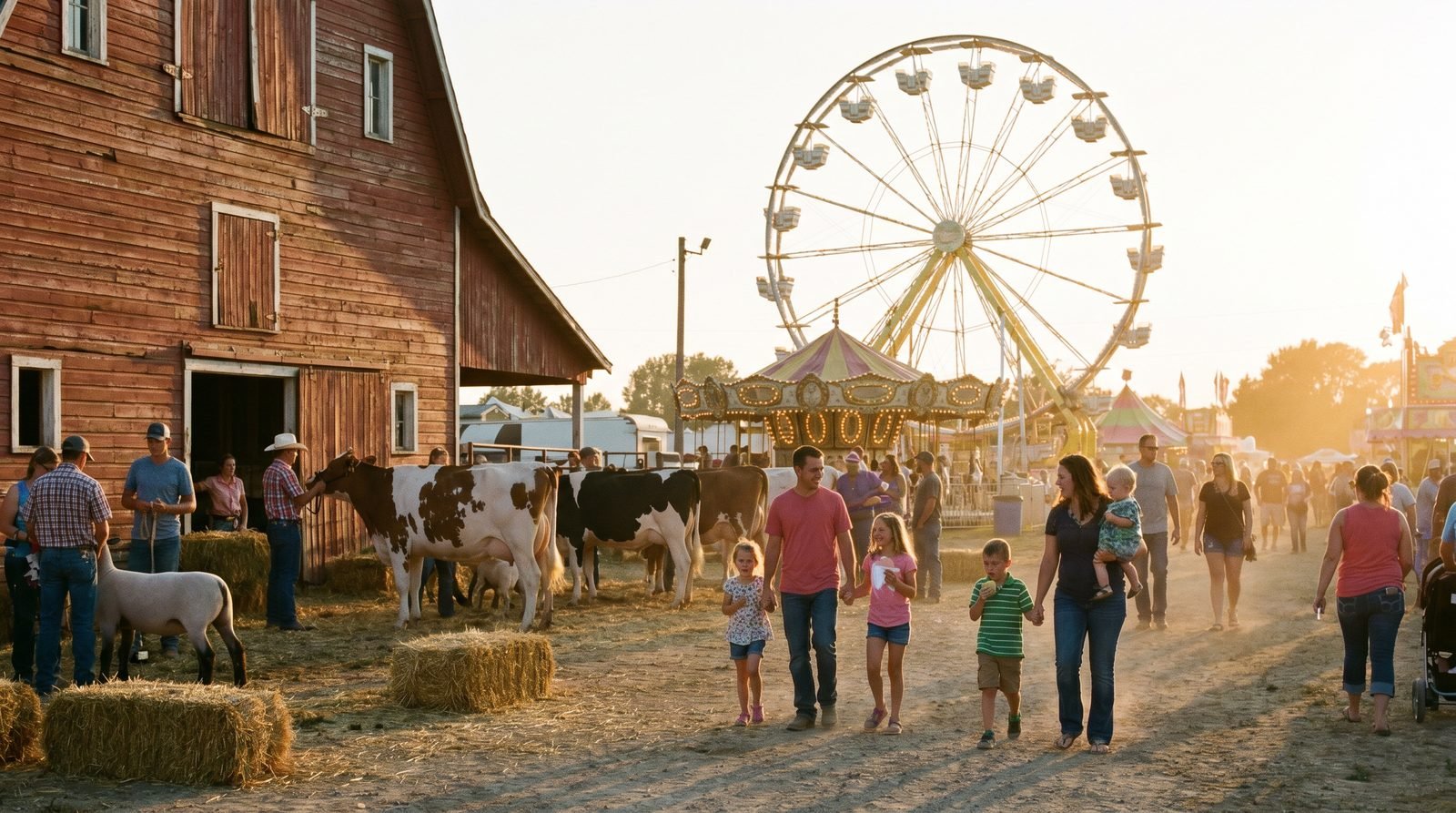
The American fair did not begin with a Ferris wheel or a corn dog. It began with two merino sheep tied to a tree on the town common in Pittsfield, Massachusetts, and a farmer who could not stop talking about them.
Elkanah Watson and the Berkshire Cattle Show (1811)
In 1807, a gentleman farmer named Elkanah Watson exhibited a pair of imported merino sheep under an elm in Pittsfield. Neighbors gathered to look, and Watson had an idea: if a couple of animals could draw a crowd, why not gather the whole county’s best livestock, offer prizes, and turn it into an event? In 1811 he organized the first Berkshire County Cattle Show under the new Berkshire Agricultural Society — generally recognized as the first modern American agricultural fair.
Watson’s innovation was not the livestock — county livestock had always existed — but the format: competition with cash premiums, public exhibition, and a social gathering that mixed farmers, families, and town. That template spread across New England and then the country within a generation.
The First State Fairs (1841 onward)
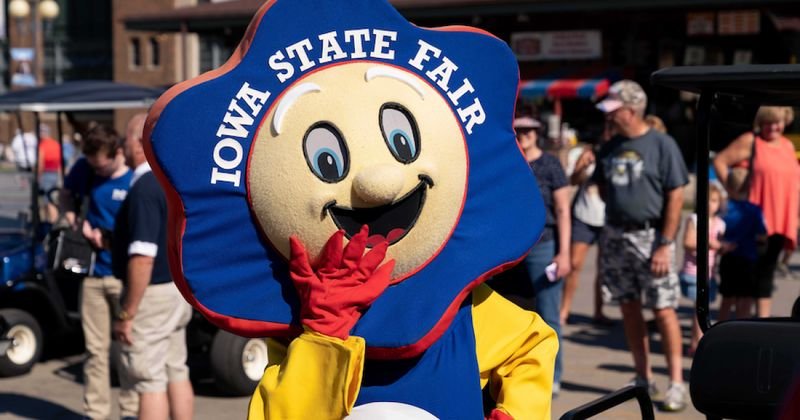
As county societies multiplied, states began to consolidate them into something grander. New York held the first official state fair in Syracuse in 1841; the Great New York State Fair still bills itself as the nation’s oldest. Other states followed quickly — the Iowa State Fair first ran in 1854 and grew so iconic it inspired the novel, the musical, and three films all called simply State Fair.
By the late 19th century the state fair was a fixture of American civic life. The Eastern States Exposition — “The Big E” — opened in 1916 as a regional fair representing all six New England states at once, with a row of full-size state houses that still stand today.
Midways, Machines, and the Modern Fair
Two forces reshaped the fair around 1900. The first was the traveling carnival — the midway, with its games, rides, and the Ferris wheel that debuted at the 1893 World’s Columbian Exposition in Chicago. The second was the machine age: fairs became showcases for the newest tractors, automobiles, and household inventions, part county competition and part trade show.
That blend — agriculture, competition, commerce, and carnival — is still the recipe today. The prize-winning steer, the giant pumpkin, the home-canning ribbon, the demolition derby, and the deep-fried everything are all descendants of Watson’s sheep under the elm.
Today there are thousands of fairs and festivals across all 50 states, from one-day grange fairs to state fairs drawing millions. Whatever has changed, the core is the same gathering Watson imagined: a community, its harvest, and a reason to celebrate it.