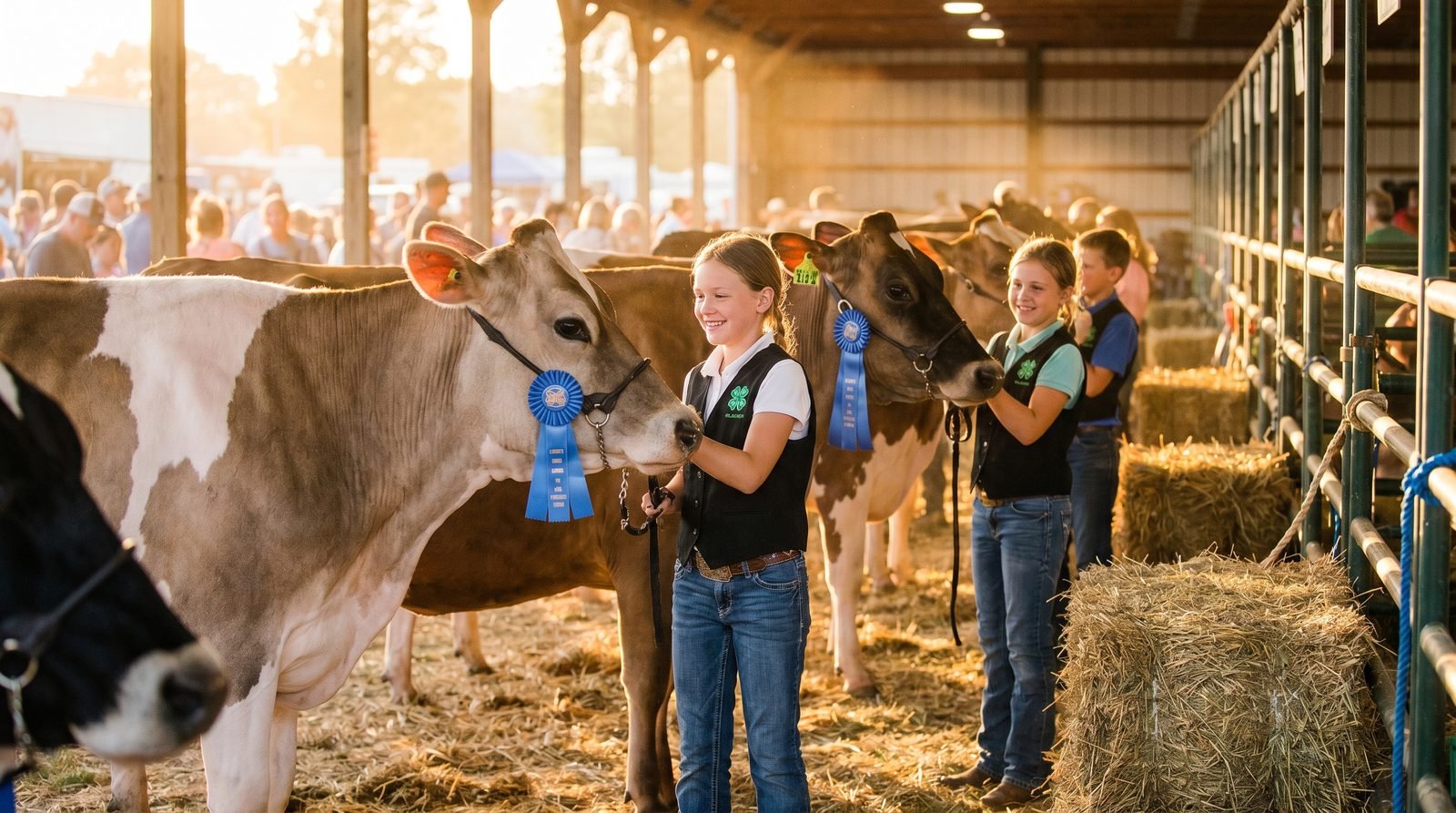
“Oldest fair in America” is a title several events claim — and they can all be right, because each holds a different superlative. Here’s how the oldest fairs sort out.
Oldest fair overall: York, Pennsylvania (1765)
The York Fair in Pennsylvania bills itself as “America’s First Fair,” tracing its history to a charter granted in 1765 by Thomas Penn — son of William Penn — a full decade before the Declaration of Independence. It predates the United States itself.
First agricultural fair: Pittsfield, Massachusetts (1811)
The modern agricultural fair — competition, premiums, public exhibition — was invented by Elkanah Watson, who organized the Berkshire Agricultural Society’s cattle show in Pittsfield, Massachusetts, in 1811. Nearly every county and state fair in the country descends from that template.
Oldest continuously running agricultural fair: Topsfield, Massachusetts (1818)
Founded by the Essex Agricultural Society in 1818, the Topsfield Fair is widely considered America’s oldest continuously running agricultural fair — it has carried on, year after year, for more than two centuries.
First state fair: Syracuse, New York (1841)
When county fairs were consolidated into something grander, New York went first: the Great New York State Fair in Syracuse (1841) was the very first official state fair in the country, and still claims the title of the nation’s oldest.
Frequently asked questions
What is the oldest fair in the United States?
The York Fair in Pennsylvania claims to be the oldest, tracing its roots to a 1765 charter — predating the United States. Massachusetts’ Topsfield Fair (1818) is considered the oldest continuously running agricultural fair.
Where was the first agricultural fair held?
In Pittsfield, Massachusetts, in 1811, organized by Elkanah Watson and the Berkshire Agricultural Society — the model for modern county and state fairs.
What was the first state fair?
The Great New York State Fair in Syracuse, first held in 1841 — the first official state fair in the country.